History Lives Among Towers, Battles, and the Tuscan Hills
Lonciano is not just a village. It is a thousand-year-old history written on the southern slope of Monte Morello, 495 meters above sea level.
The toponym derives from _Lonicius_, an ancient Roman estate. But it was in the Middle Ages that Lonciano became legendary.
In 1015 the Calodingi Counts donated “three farms in the place UBI DICITUR LONTIANO” to the Camaldolese Monks of Badia a Settimo. Centuries of sharecropping began. The monks used the proceeds from agriculture for build the Church of San Donato (1121)
Between the 12th and 13th centuries Lonciano was surrounded by walls and towers. It is a border land between the Guelphs and Ghibellines.
The Book of Montaperti records it as a fiefdom of the Alpisciani. It mentions Compagno da Lonciano”, a hero in the historic Battle of Montaperti in 1260 Gra
Here, the atmosphere was one of struggle, faith, and power.
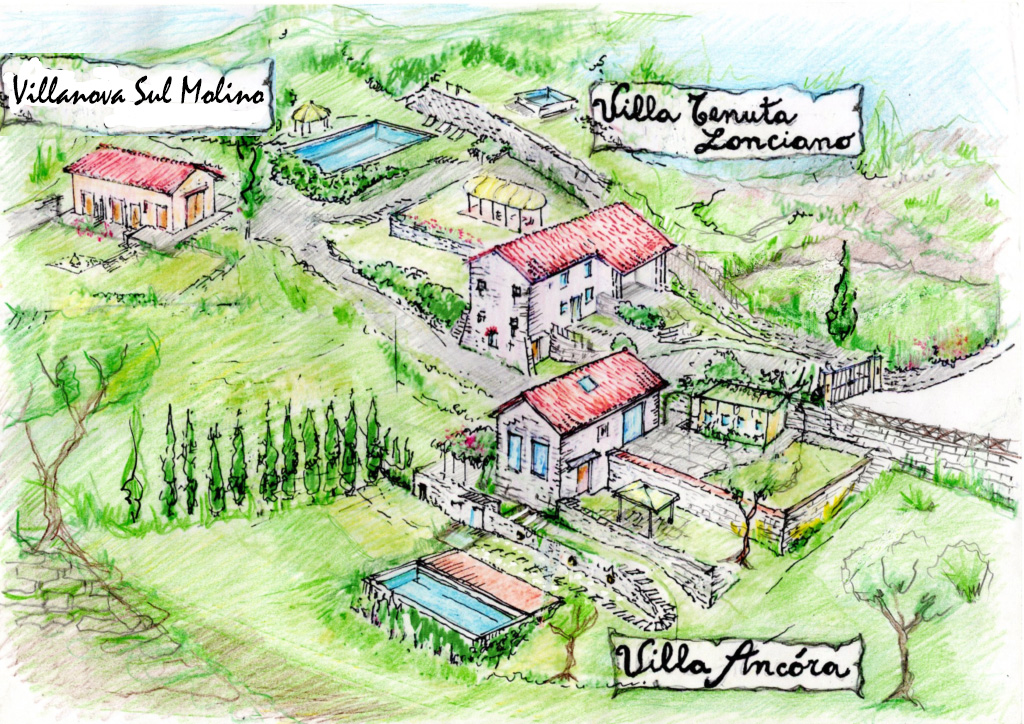
For centuries, the village belonged to the Convent of Santa Maria a Quarto. The nuns governed it with the help of notaries who became famous: Ser Albizzo da Lonciano and Burnetti da Lonciano. It is assumed they lived in the current Villa Ancora, protected by a triple ring of walls.
Then came the great Florentine families: Pecori, Fioravanti, Della Tosa, and Cambini.
In 1775, the Church of San Donato collapsed and was abandoned. In 1808, Napoleon suppressed the religious orders, and the nuns left Lonciano forever.
Decline began. The villas became barns, the 14th-century mill became a stable, and the tower became a shelter for sheep. Historian Carocci wrote: “lords’ houses now reduced to stables.”
Lonciano has now rediscovered it’s ancient Village charm and welcome “Guests from all over the world”